Volume Control: Reading a Barn Conversion Before the Heart Takes Over
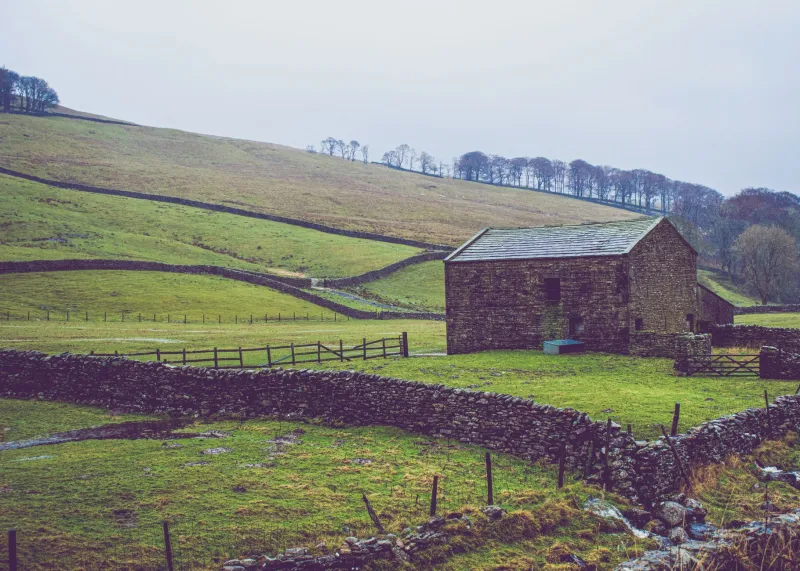
Barn conversions are seductive. You walk in, the ceiling disappears upwards, a wall of glass frames a field, and somewhere in the back of your mind a small voice says: yes, obviously, this. That reaction is entirely reasonable. It is also precisely the moment to slow down. A converted barn is not just a big old building with a new kitchen in it. It is a planning history, a roof performance, a services puzzle and a resale proposition, all wearing a very good pair of boots.
None of this means you should walk away. It means you should admire the volume and then ask what is holding it up, keeping it warm and allowing you to park a second car without starting a boundary dispute.
The building is not the same thing as the conversion
Start by separating what is genuinely old from what has been done to it. Exposed trusses, stone walls and a threshing floor are one conversation. Insulation, glazing, heating and drainage are another. Estate-agent particulars have a habit of blending the two into a single romantic haze, so ask directly: which parts are original, which are structural alterations, and when were the windows, roof and services last dealt with?
A good conversion respects the building's logic. It puts bedrooms where the roof allows head height, keeps the best volumes for living, and does not pretend a cow shed was designed with a downstairs loo in mind. A less good one has chased the look at the expense of how the house actually works. You want the first sort, or a clear idea of what it will cost to turn the second sort into it.
The occupancy condition that can outlive the seller
Some rural conversions come with an agricultural occupancy condition, often shortened to an AOC. In plain terms, the planning permission allows the house to be occupied only by someone connected with agriculture or forestry, or a dependent. These conditions can be old, oddly worded and unevenly enforced. They can also affect mortgageability and resale, even if the current owner has never had a problem.
Ask for the planning permission and any subsequent variation or certificate of lawful use. If an AOC is still attached, take proper planning and legal advice before exchange — not after. Sometimes the condition has been removed; sometimes it has quietly sat there for decades. You do not want to discover at remortgage stage that your dream home is legally reserved for a retiring sheep farmer who does not exist.
Curtilage is doing more work than you think
Curtilage is the land immediately around a building that is tied to its use — the yard, the track, the old lean-to, the parking area. It matters for two reasons. First, it affects what you can extend, alter or convert without planning permission. Second, for listed buildings it can determine whether a structure is 'curtilage listed' and therefore protected in its own right.
Ask to see a plan that clearly identifies what you are buying, what is shared, and what rights you have over the bits in between. Barns often come with informal arrangements that have hardened into habit: the neighbour crosses your yard, the farmer uses the track, the septic tank sits under someone else's lawn. Habit is not the same as a legal right. Make sure the paperwork describes the life you think you are buying.
Listed barns need a paper trail, not a vibe
If the barn is listed, or sits within the curtilage of a listed building, every alteration matters. Listed building consent is not a formality, and unauthorised work can follow you through the purchase. Ask what consent was obtained for the conversion, the roof lights, the glazing, the internal partitions and any external flues or rainwater goods. If the answer is vague, treat that as information.
A listed barn can be a wonderful thing to own. It can also be a building where 'we just painted it' is a more complicated sentence than you would like. A good solicitor and a conservation-aware surveyor are worth their fees here. This is not the moment for a bargain-basement conveyancing service.
Roofs, insulation and the barn's favourite trick
Barns are very good at looking airtight while being anything but. That spectacular roof may be beautifully finished and still under-insulated, poorly ventilated or hiding thermal bridges at the wall plate. Ask for U-values, building regulations completion certificates and any evidence of how the roof was upgraded. If the conversion is older, assume the thermal performance is older too.
Look for condensation, staining at ceiling junctions, cold spots near external walls and any signs of mould behind curtains or wardrobes. Check the heating and hot water arrangement: a barn with a huge glazed gable and a small boiler is a lifestyle choice with a bill attached. Also ask about ventilation. Sealing a big volume tightly without managing moisture is how you get a very handsome building that smells faintly of wet dog.
Access, services and the unglamorous miles
A barn can feel wonderfully remote and still be entirely dependent on a shared track, a private water supply, a septic tank and a broadband connection that was last upgraded during the Blair era. Ask who maintains the track and how the cost is shared. Check the drainage arrangements and whether they meet current general binding rules. Confirm water pressure, mobile signal and broadband speeds at the house itself, not at the end of the lane.
Then think about the everyday drive. A beautiful barn ten minutes further out is a different purchase in January than it is in June. Try the route at school-run time, in the dark, and with a delivery van coming the other way.
Who else will want this volume?
Finally, think about resale while you are still in love. A dramatic conversion with two bedrooms, an awkward kitchen and a garden that is really a courtyard may suit you perfectly. It will not suit everyone. The best barn conversions balance spectacle with ordinary domestic life: somewhere to put coats, a kitchen that works, bedrooms that are not just impressive voids, and a parking arrangement that does not require a family conference.
Ask yourself whether the volume is doing the work of a good floor plan, or replacing one. If it is the latter, you may be paying for a feeling rather than a home. That feeling is real — but so is the mortgage. Fall for the barn by all means. Just read the paperwork first.