The Beam That Isn't: A Buyer's Guide to Cottage Stagecraft

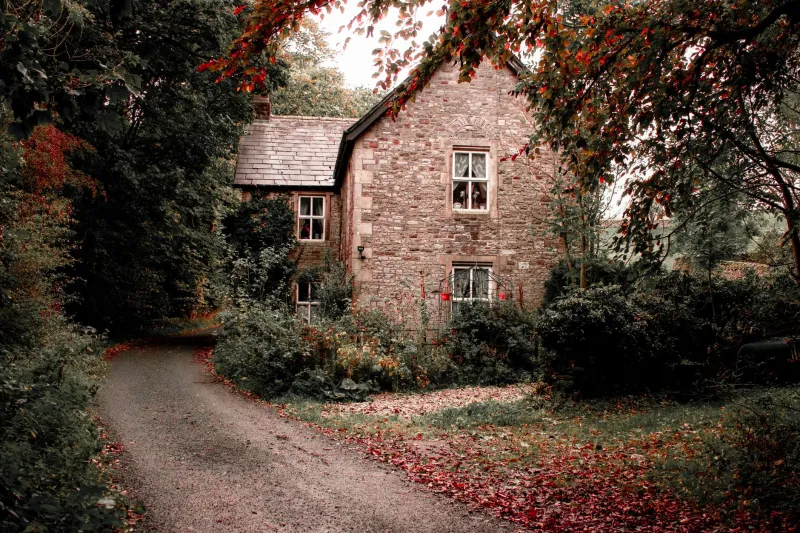
Photo by Photo by Martina Jorden on Unsplash on Unsplash
There is a moment, usually just after the estate agent has said 'original features', when a buyer looks up at a blackened beam and feels the price tag become reasonable. The trouble is that not every beam is old, not every brick is solid, and not every patch of distressed paint is a century of wear. Some of it is stagecraft — and stagecraft has a habit of becoming expensive once you own it.
None of this is to say that pastiche is a crime. A well-made fake beam in a 1980s cottage can be harmless, even charming. But buyers should know what they are looking at, because cosmetic character can affect how a house is valued, insured and maintained. It can also hide shortcuts that are much less charming than they look.
Start with the beam test
Genuine old beams are rarely uniform. They were cut from trees, not catalogues, so expect slight twists, waney edges, old mortice holes, checks and a grain that follows the timber. A real beam will usually be part of the structure, or at least have a plausible relationship with the ceiling and walls. It will feel heavy and solid, and it may show historic repairs — an iron strap, a scarf joint, a bit of old lime plaster.
A fake beam is often too straight, too square and too black. Tap it: a hollow sound may mean a timber casing over a steel or a modern joist. Look at the ends. Are they carved to look hand-hewn but fixed with modern screws? Is the 'aged' surface suspiciously even? Black paint is not the same as centuries of soot, and a beam that has been stained rather than waxed can look flat in daylight.
Brick slips and the sponge-back wall
Reclaimed-style brick slips have their place. They are thin slices of brick fixed to a backing board, and they can give a fireplace or a garden wall the look of old masonry without the weight. But they are not a brick wall. If a chimney breast has been covered in slips, ask what is behind them. Is there a working flue? Is the original brick intact? Has a vent been blocked?
A solid brick wall should feel cold and slightly uneven. It should have depth at the reveals and a bond pattern that continues around corners. Brick slips often stop at the edge, and the mortar can look too neat. In a damp old house, a decorative skin can also trap moisture if it has been sealed too tightly. That is not a reason to panic, but it is a reason to ask who did it and how.
Distressed paint and instant patina
There is a difference between paint that has worn away and paint that has been sanded, waxed and photographed for a mood board. Genuine wear is uneven in a practical way: hands have touched the same spot for decades, a door has been kicked, a windowsill has taken the weather. Fake distress often appears where no one would ever have touched — the middle of a panel, the top of a cupboard, a mantelpiece that has apparently been caressed by generations of very short people.
Look at the edges. Real old paint builds up in layers and can be alligatored or flaking. A distressed finish is usually sealed with a clear coat, so it feels smooth. Neither is wrong, but one is maintenance and the other is decoration. If you are buying a listed building, remember that even cosmetic alterations can need consent if they affect the character of the building. Check before you assume you can simply paint over it.
The room-by-room checklist
In the sitting room, look up. Are the beams structural or boxed-in? Are there cracks in the ceiling that follow the beams? A fake beam can hide a steel, which is fine, or a mess, which is not. In the hallway, check the floorboards. Genuine old boards will have uneven widths, old nail holes and a patina that comes from feet, not a tin of dark wax. In the kitchen, be wary of 'reclaimed' wood worktops that are actually new timber with a rustic stain. They can be perfectly good, but they will need oiling and they are not historic.
In the bedroom, look at the fireplace. Is it a real chimney breast or a decorative surround? A reclaimed-style mantel can be lovely, but if it has been stuck to a plasterboard wall with no flue behind it, it is furniture, not architecture. In the bathroom, check the 'period' tiles. Reproduction tiles are fine, but they are not the same as original Victorian encaustic tiles, and the grout will behave differently. In the loft, look for evidence of the roof structure. If someone has added fake rafters or a 'cottage' ceiling, ask what they are covering.
What pastiche does to value
A genuinely characterful house usually carries a premium because buyers trust the story. Pastiche can borrow some of that premium, but it rarely holds it under scrutiny. A valuer will look at the construction, the condition and the location, not just the atmosphere. If the beams are fake and the brick slips are stuck on, that is not necessarily a disaster, but it can narrow the pool of buyers who will pay full price. It can also raise questions about what else has been done for show.
Insurance is a quieter issue. Most fake beams are not a problem in themselves, but undeclared alterations can be. If a chimney has been removed, a wall has been taken out, or an outbuilding has been converted without consent, your policy may not respond as you expect. If the house is listed, non-compliant work can become a legal problem as well as a financial one. Keep the paperwork, and ask for it before you exchange.
When to walk away
Walk away if the pastiche is hiding something you cannot see. A fake beam over a cracked steel is a warning. Brick slips over a damp wall are a warning. A 'restored' fireplace with no flue and a blocked chimney is a warning. But do not walk away simply because something is reproduction. A well-fitted fake beam in a modern cottage is not a scandal. The question is whether the house is being honest with you. If it is not, assume the price should reflect that.