The Timetable Test: Which Country Towns Still Work on a Monday Morning
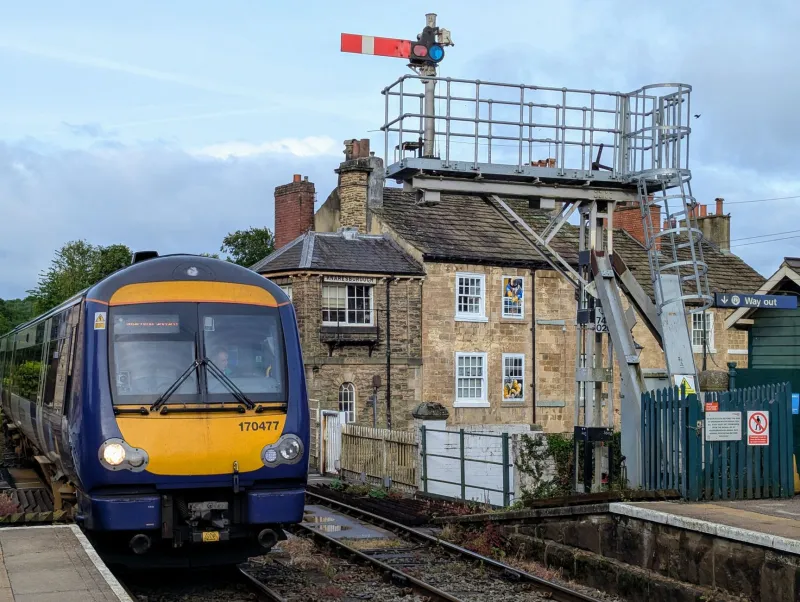
Every character town looks commutable in an estate agent's particulars. There is a station, a fast train, a nice high street and a cottage with a wobbly fireplace. What the particulars never show you is the 6.42am shuffle across a car park, the 23.14 that stops everywhere, or the season ticket that quietly costs more than a small car.
So before you fall for a town, give it an hour of your time with a stopwatch and a train app. Not the fantasy commute. The real one, on a Tuesday, in February, when it is dark and drizzling and you have a bag of shopping and a cold.
Rule one: the walk to the station is part of the journey
Estate agents measure distance to the station in a straight line. Your legs measure it in hills, pavements, unlit footpaths and a level crossing with a barrier that comes down every eight minutes.
Walk it yourself, at the time you would actually walk it. A house described as 'ten minutes from the station' can be a twenty-minute trudge up a lane with no pavement — fine in June, grim in January. Character towns are often old, which means the station sits at the edge, the lanes are narrow, and the pedestrian route may be considerably longer than the road route.
Also check the walking route for the things you will use daily: a shop open past seven, a lit path, a bench, a bus that runs when the train is cancelled. In small towns, the station end and the high street end can feel like two different places.
Rule two: test the train you will actually catch
Most of us skim the timetable around midday and find a lovely 58-minute fast service. Then reality arrives: the fast trains are concentrated in the peaks, and the shoulder services — the ones you would actually use if you leave the office at 6.30 or need to be in for 9.15 — are slower and fuller.
Build a small grid for a made-up week: three mornings in, two evenings out, one late finish. Look up the actual times for each. If the town only works because of a single 7.05 that you will never catch once you have children, a dog or a habit of oversleeping, it does not work.
Check too how many services per hour run in each direction. A town with two an hour in the peak and one an hour off-peak is a different proposition from a town with four. Frequency matters more than headline speed for daily life — a slower but frequent service forgives a missed train; a fast but hourly one punishes it with an hour of your life.
Rule three: the last train is the deal-breaker
This is the one people forget, and it is the one that shapes your social life for years. Look up the last realistic train home on a Thursday. Not the official last train that leaves at 23.52 and takes ninety minutes and a change at a junction where the waiting room is locked.
Ask yourself what that means in practice. Can you go to a work leaving do? A gig? Dinner that runs long? A late train home once a month is an adventure. A last train at 22.15 means you say no to things, and that is a quiet, cumulative cost of living somewhere beautiful.
While you are there, look at the Sunday service. It is often the first thing to be thinned out and the last thing anyone checks.
Rule four: do the season-ticket maths properly
Rail fares are not a small line in the budget. Work out the annual season ticket cost from the actual station, then divide it by twelve and add it to your mortgage or rent before you compare towns. A charming town one stop further out can be a couple of thousand pounds a year more expensive than the plainer one next door — and that difference compounds over a decade.
Do not forget the extras: the car park season ticket or the residents' parking permit, the occasional taxi when the last train fails, the coffee you buy because you are at the station twenty minutes early.
A quick sanity check: compare the annual ticket against the price gap between the two towns. Sometimes the cheaper house in the prettier town is not cheaper at all once the timetable is priced in.
Rule five: parking is the silent tax
Station car parks in popular character towns fill early. Some have waiting lists for permits that run for years. Others have been built over, or are a ten-minute walk from the platform, which rather defeats the point of driving.
Check three things: how early the car park fills, whether a permit is available to new residents, and what happens on a market day or a match day. If you plan to walk, check the lighting and the winter state of the footpath. If you plan to be dropped off, check there is somewhere legal to stop that is not a double yellow on a blind bend.
The shortlist, in tiers
Rather than a list of towns — because the right answer depends on your terminus, your budget and your tolerance for a change — think in tiers.
Tier one: the honest workhorse. A station within a fifteen-minute level walk of the high street, four or more peak services, a genuine off-peak service, a last train after 23.00 and a season ticket you can justify. These towns are rarely the prettiest postcard, but they have the bones of a working week.
Tier two: the compromise. Two or three peak trains, a station a twenty-minute walk out, a last train around 22.30. Perfectly liveable if you are in the office three days a week and your social life is more pub than prosecco bar.
Tier three: the holiday home in disguise. One fast train a day, a station two miles out, no evening service after 21.00. Beautiful. Not a commute.
Before you offer
Do the whole thing once for real. Book a day's annual leave, get up at the hour you would get up, drive or walk to the station, buy a coffee, catch the train you would catch, and come home on the train you would actually come home on. Then walk to the house you are considering in the dark.
It sounds excessive. It takes one day and it costs less than a survey. Charm is lovely, and character towns deserve their reputation. But the timetable always gets a vote — and it is usually the one that decides.