Who Owns the Lane? The Access Questions That Matter More Than the Front Door
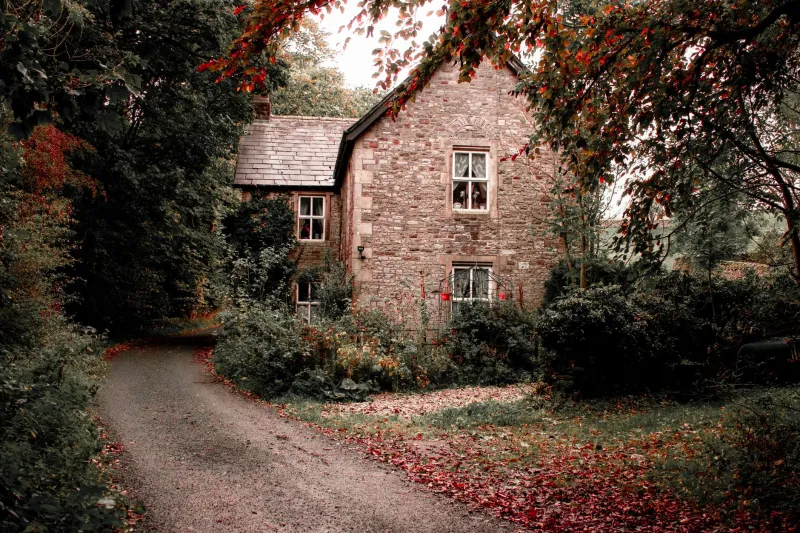
There is a particular kind of cottage photograph that makes everyone go a bit weak at the knees: stone walls, a wonky chimney, a gravel sweep in front and a wooden gate that looks like it has been there since the reign of a previous monarch. What the photograph rarely shows is the line on the title plan that says the gravel sweep is shared with next door, the farm at the end, and possibly a man called Derek who has a caravan.
Access is one of the least romantic parts of buying a characterful home. It is also one of the most important. A five-minute drive past the property tells you whether your car fits. It does not tell you whether you have the legal right to use that drive, who is supposed to repair it, or what happens when the neighbour’s builder blocks it for a fortnight.
At Barnaby & Jones, we are all for charm. But charm with an unclear right of way is just a future argument with a nice view.
First, what does a right of way actually mean?
A right of way is an easement. In plain English, it is a legal right to pass over land that someone else owns. It does not usually mean you own the land, and it does not automatically mean you can park on it, block it, dig it up or install a hot tub on it. The exact wording matters enormously.
A right of way might be granted in a deed, reserved when land was sold off, or claimed through long use. It might be for pedestrians only, or for vehicles. It might be limited to certain hours, certain vehicles or a particular route. It might be registered on the title, or it might be one of those arrangements that has been passed down through nods, handshakes and a rusty gate.
When you buy, your solicitor should check the title register and title plan for both your property and the neighbouring land. They should read the transfers and deeds in the legal pack, not just glance at the plan and say ‘looks fine’. If the right of way is not properly documented, you need to know that before exchange, not after the removal van has arrived.
Shared drive, private lane, adopted road: they are not the same thing
A shared drive is often exactly what it sounds like: a driveway used by more than one property. The key questions are who owns the surface, who owns the land underneath and who has the right to use it. Sometimes each neighbour owns a strip of the drive up to the middle, with mutual rights of way over the other half. Sometimes one person owns the whole lane and everyone else has a right of way over it. Sometimes nobody is quite sure, which is rarely a bargain.
A private lane is different again. If it is not adopted by the local authority, the council is unlikely to repair it, grit it or empty the bins from the end of it. The owners or users will usually be responsible for maintenance, often through a formal agreement or a management company. If there is no agreement, you may be relying on goodwill. Goodwill is lovely at a summer fete. It is less reliable when the lane needs resurfacing and the quote is five figures.
An adopted road is maintained by the council, but do not assume that every stretch of tarmac outside a cottage is adopted. Check the local authority search and ask your solicitor directly. A road can look beautifully maintained and still be private, with the maintenance bill shared among the houses at the end.
Read the legal pack like a suspicious person
The legal pack is not bedtime reading, but it is where the truth lives. Ask your solicitor to explain the access arrangements in plain English, including the title register, title plan, transfer documents, any deed of grant or reservation, and the property information form. The local authority search and drainage and water search can also flag public rights of way, adopted roads and services running under the lane.
Look closely at the plan. Is the shared drive coloured or edged? Does your title include any part of it? Is the right of way shown over the whole lane or only a strip? Are there gates, narrowing points or parking areas marked? A plan can be technically correct and still leave you with a nasty surprise if the wording and the drawing do not match up.
Be wary of vague phrases such as ‘subject to a fair proportion of the cost of maintenance’. Fair according to whom? On what basis? Is there a fixed percentage, a formula, or a history of invoices? A clause that sounds reasonable in a solicitor’s office can become very unreasonable when the neighbour decides that your share is 80 per cent because you have the biggest car.
Maintenance: who signs the cheque?
Access and maintenance are two separate issues, and both need answering. You might have a perfect right to drive over a lane, but no clear obligation on anyone to repair it. Or you might have a right of way and a maintenance obligation that is so vague it is effectively unenforceable until someone sues someone else.
Ask for copies of past repair invoices, maintenance agreements and any correspondence about disputes. Ask whether there is a management company, a residents’ association or a sinking fund. Ask what happens if one owner refuses to pay. Ask whether the maintenance obligation is registered on the title so that future owners are bound by it. If the answer is ‘we just sort it out between us’, factor in the possibility that one day you will be the one sorting it out with a solicitor.
Also check who owns the boundaries, verges and gates. A ransom strip – a small piece of land that controls access – can be surprisingly expensive if someone decides to be difficult. It sounds like the plot of a rural drama, but it happens.
The five-minute drive inspection is not due diligence
When you visit, drive the route properly. Visit in the rain, if you can, and see where the water sits. Check the surface, the width, the turning circle and the visibility at the junction. Is there room for two cars to pass? Can a delivery van get in? Could a fire engine? Where do the bins go on collection day? Is there a gate that someone else can lock?
Look at how the drive is used in practice. Are there parked cars that would make your morning exit a game of inches? Are there pots, planters or a stray trampoline that suggest the neighbours treat the lane as their own? Talk to the seller about the day-to-day arrangements, but do not rely on a friendly chat as legal evidence. Ask your solicitor to confirm what the documents actually say.
A pretty drive can also hide services. Drains, water pipes, cables and soakaways may run under it. If someone needs to dig up the lane, who pays, who repairs it and who is responsible for putting it back? These questions are not glamorous, but they are cheaper than discovering the answers after completion.
What to ask before you fall for the front door
Ask who owns the lane. Ask whether your right of way is registered and exactly what it permits. Ask who maintains the surface, the drains and the gates. Ask how the cost is apportioned and whether there is a written agreement. Ask about past disputes, future development and any restrictions on parking or vehicles. Ask what happens if the neighbour sells, builds, blocks the route or lets the surface deteriorate.
Then ask your solicitor to put the answers in writing. If the legal pack is thin, vague or relies on a handshake from 1978, do not be embarrassed to walk away or renegotiate. A characterful cottage should come with a story. It should not come with an access problem that only reveals itself when you try to move in.