Straw, Reed and the Long Game: Buying a Thatched House Without the Halo
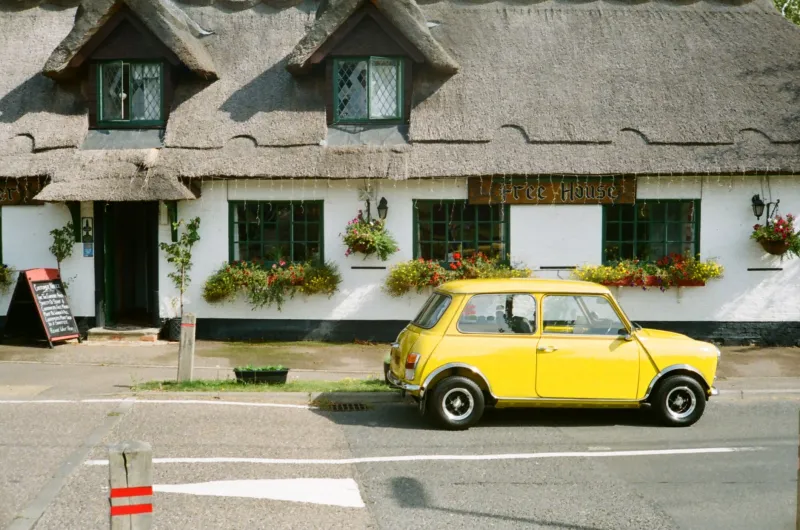
A thatched roof does something to a house that no amount of pointing and paint can fake. It softens the edges, makes a cottage look as if it grew there, and gives every estate agent within a five-mile radius a reason to use the word ‘chocolate-box’. It is also a roof with a maintenance clock, an insurance conversation and a set of costs that do not care how pretty the front garden is. If you are buying in 2026, the trick is to keep the affection and lose the halo.
Read the roof before the rooms
Most buyers walk into a thatched cottage and immediately start imagining where the sofa will go. Fair enough. But the roof should be the first thing you ask about, not the last. Thatch is not a single product. It is a family of materials and techniques, each with its own lifespan, repair culture and insurance implications. A listing that says ‘recently rethatched’ is a starting point, not an answer.
Ask what the roof is made of, who did it, when it was done, and whether there is paperwork. A thatcher’s invoice or report is worth more than a paragraph of estate-agent prose. If the vendor cannot tell you the difference between water reed and combed wheat straw, that is not necessarily a red flag — but it does mean you need someone who can.
Reed, straw and the difference it makes
Water reed is the hard-wearing option: dense, durable, often associated with Norfolk and the Broads, and capable of lasting several decades if it is looked after. Combed wheat straw is the softer, more traditional look — the kind of roof that gives Devon and Somerset cottages their particular velvety outline. Long straw is another old tradition, with a rounder, shaggier finish. None of these is automatically better. They simply behave differently, cost differently and suit different buildings.
A water reed roof might give you forty years or more. A straw roof is more likely to sit in the twenty-five to thirty-five year range, depending on pitch, exposure and craftsmanship. The ridge — the decorative cap along the top — is the bit that goes first, often needing attention every ten to fifteen years. That ridge is not a cosmetic afterthought. It is the roof’s first line of defence, and a tired ridge makes the whole roof look older than it is.
The maintenance clock is always ticking
A thatched house is not a low-maintenance purchase. It is a low-drama purchase if you plan for it, and a very high-drama purchase if you don’t. The sensible approach is to treat the roof as a sinking fund with a schedule. Ask when the next ridge is due, when the main coat is likely to need replacing, and what the current thatcher would quote for both. Then add a contingency, because scaffolding, access and listed-building consent have a habit of turning a tidy budget into a creative one.
Do not be fobbed off with ‘it was rethatched a few years ago’. A roof rethatched in 2019 is not maintenance-free in 2026. It may be in excellent order, but it still needs inspecting, and the ridge may already be showing its age. A full rethatch on a modest cottage can run from the high teens into the thirties of thousands of pounds, depending on material, size, access and complexity. A ridge replacement is a smaller sum, but not pocket change. If the maths only works by ignoring the roof, the maths does not work.
What a thatcher sees that you won’t
A general building survey is useful, but it is not a thatch survey. Many surveyors will rightly recommend a specialist inspection, and you should take that advice. A thatcher reads a roof from the ground and from a ladder: the lie of the straw, the condition of the netting, the colour and texture of patches, the state of the ridge, the way water runs at valleys and around chimneys. They will look at the battens and the fire barrier underneath, not just the pretty outside.
Bad patchwork often shows up as a different colour or texture in one section, or as netting that has been pulled tight over sagging material. Moss is not automatically a disaster, but it can hold moisture and mask problems. Sagging is more serious. So is a roof that has been ‘topped up’ repeatedly without proper stripping back. Ask the thatcher what they would do next, and when. A good one will give you a sequence, not a sales pitch.
The insurance conversation
Thatched property insurance is a specialist market, and it is not always as frightening as the folklore suggests. Plenty of standard insurers will decline, and the ones that accept will want evidence that the building is maintained. Expect questions about the age and condition of the roof, the chimney, the wiring and any wood-burning stove. Some policies require a recent electrical certificate or proof of chimney sweeping. If you have a stove, learn how to use it properly and get the flue swept regularly. Fire risk in a thatched home is real, but it is mostly a chimney and wiring story, not a spontaneous-combustion story.
Get insurance quotes before you exchange contracts, not after. The premium can vary enormously between providers, and the cheapest quote may come with conditions you cannot meet. A thatched roof is not a reason to walk away on its own, but an uninsurable or barely insurable roof is. Ask the vendor for the current policy details and claims history. If they look shifty, pay attention.
The romance test
So is the romance worth the premium? Sometimes. A well-maintained thatched cottage can be a joy: warm in winter, cool in summer, and possessed of a texture that modern materials cannot imitate. But it is a custodial purchase. You are not just buying a house; you are taking on a roof with a diary. Resale can be slower because the pool of buyers is smaller, and mortgage lenders can be cautious. Listed-building consent may be needed for alterations, and even small changes can require consent in a conservation area.
Buy it because you want the long game, not because you want a bargain. Buy it with a proper survey, a thatcher’s report, an insurance quote and a sinking fund. Then enjoy the thing itself: the sound of rain, the deep eaves, the way the roof settles into the landscape. Just don’t pretend the halo comes free.
A short buyer’s checklist
- Ask for the roof material, rethatch date, thatcher’s details and any warranty or report.
- Get a specialist thatch survey, not just a general building survey.
- Budget for the ridge and the next full rethatch before you make an offer.
- Obtain thatched-property insurance quotes early and read the conditions.
- Check the chimney, flue, stove and wiring, and ask for sweeping and electrical records.
- Confirm listed status and conservation-area rules before planning any work.
- Ask how scaffolding and ladder access would work, especially on a tight village plot.
Thatch is a commitment, not a filter. Get the boring bits right and the romance has a much better chance of surviving the first winter.