The Roof's Honest Chatter: Reading Chimneys at a Viewing
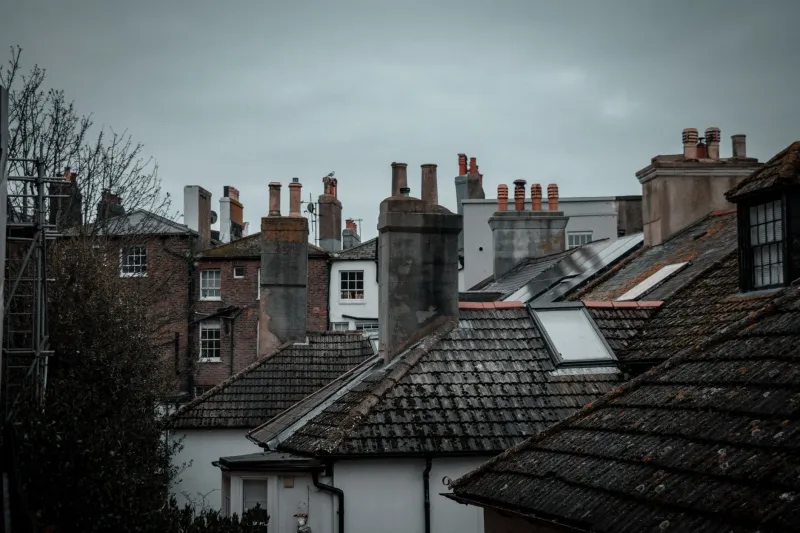
Most buyers arrive at a character cottage and look straight at the front door. Fair enough. But before you fall for the latch and the roses, take ten steps back and look up. The roofscape is where old houses do their most honest talking. Chimney stacks are especially chatty. They are exposed to wind, rain and frost, they carry the weight of pots, and they often sit on party walls shared with next door. A stack that looks merely quaint from the pavement can be a quiet warning about water ingress, failed mortar or a bill that will be shared with someone you have not met yet.
This is not a scare story. Plenty of old chimneys are fine, and many wonky pots are just period charm. The trick is to separate the cosmetic from the consequential, then use what you see sensibly in negotiations. A chimney stack audit is not a substitute for a proper building survey. Think of it as a pre-survey conversation starter.
Start with the silhouette, not the pots
Stand across the road and look at the line of the stack against the sky. Is it upright? A slight lean can be original settlement, but a sudden list, a bow or a visible kink in the brickwork deserves a closer look. Check the mortar joints. On an older stack, soft lime mortar may have eroded and been repointed with hard cement. That can look neat for a while, but it can also trap moisture and spall the bricks. Frost then does the rest. If the bricks near the top are flaking, crumbling or missing faces, the stack is telling you it has been getting wet.
Also look at the base of the stack where it meets the roof. Is there a tidy lead flashing, or a smear of black gunge? Is the roof covering flat and sound around it? A stack is a natural gathering point for rainwater. If the flashing has failed, water can travel down the chimney breast and appear as a damp patch in a bedroom or on a chimney breast wall. That stain may look like a small interior problem. It often starts at roof level.
Flaunching: the mortar collar that keeps water out
The flaunching is the sloping mortar cap around the base of the pots. It sheds water away from the top of the stack. When it is cracked, missing or has grass growing out of it, rainwater gets into the brickwork and freezes. Look for a crisp, continuous slope. Beware of a thick, lumpy repair that looks like someone has slapped on a handful of mortar in a hurry. It may be hiding a wider problem, or it may simply be a DIY job from a previous owner. Either way, it is a question for the surveyor.
Pots themselves are less mysterious. Clay pots can crack, and old ones can be loose. A missing pot does not mean the chimney is about to fall down, but an open flue can let rain in. Cowls and caps can help, but they can also be a sign that someone has been trying to solve a draught or a bird problem. None of this is necessarily expensive. It is the sort of work a chimney sweep or roofer can price quickly, and it is fair to ask for an invoice or a recent certificate if the seller says it has all been done.
Shared stacks and party walls: whose bill is it?
In terraces and semis, one stack often serves two houses. That makes it a shared structure, and shared structures have a way of making simple repairs complicated. Before you exchange, ask who has repaired the stack in the past and whether there is any agreement about maintenance. Check the title documents and talk to your solicitor. If the stack sits on a party wall, repairs may need notice or consent. A cracked stack in a mid-terrace can be a straightforward roofing job, or it can become a conversation with neighbours, a party wall award and a split invoice. The roofscape tells you to ask the question. The legal paperwork tells you who pays.
The too-tidy repair
A suspiciously clean stack on an otherwise weathered roof is worth a second look. New mortar, fresh bricks and a crisp flaunching can be a sign of proper maintenance. They can also be cosmetic work done just before a sale. Look at the whole roof: are there slipped tiles, a sagging ridge or fresh cement around other features? If the stack has been rebuilt but the flashing looks old, or if the pointing is bright and the pots are still loose, the work may have been partial. Ask for dates, guarantees and photographs. A good roofer will have them. A vague answer is not a deal-breaker, but it should shape your offer.
What to do with what you see
Take photographs from ground level and from any lawful vantage point. Note the stack's position, the number of pots, the state of the flaunching and any obvious lean. Send those notes to your surveyor before the inspection so they can pay particular attention. If you are buying at auction or with a tight deadline, a quick roof inspection by a local roofer can be money well spent. It will not replace a full survey, but it can turn a vague worry into a firm number.
In negotiations, be specific and proportionate. 'The chimney looks old' is not a negotiating position. 'The flaunching is cracked and the rear pot is loose; can we agree a £600 allowance for making good?' is. Keep the tone neutral. Sellers of old houses have usually lived with the same quirks for years, and they may genuinely not know what is going on up there.
When to walk, when to price it in
Price it in when the issues are local: cracked flaunching, a loose pot, a failed flashing, some repointing. Walk away, or at least get a structural engineer's view, if the stack is visibly leaning, if bricks are displaced, if there is movement in the chimney breast inside, or if a shared stack has become a neighbour dispute. Water ingress that has been ignored for years can rot roof timbers and stain plaster, and that is before anyone has lit a fire.
A chimney is not the whole house. It is one of the oldest, most exposed parts of it. Look up, ask good questions and let the roofscape join the conversation. Then let the surveyor do the proper listening.