Torch in Hand: How to Judge Light in a Period Home When the Sun Won't Help
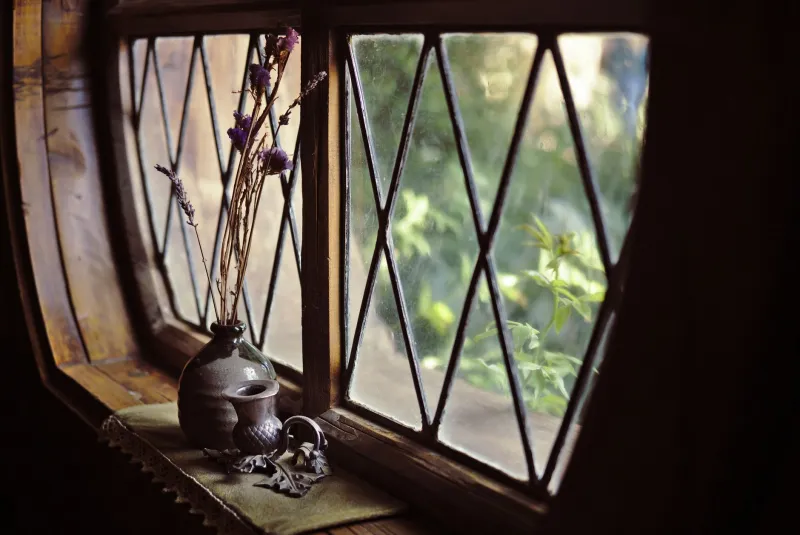
There is a particular kind of disappointment that arrives at about 3.40pm in a November viewing. You are standing in a charming sitting room, admiring the wonky floorboards and the fireplace, and it is already dusk. The agent says something about the light being lovely in summer. You nod. The vendor has lit three lamps and a candle. Nobody mentions that the house faces north, the neighbour's leylandii are doing their best impression of a wall, and the window is the size of a tea towel.
Light is one of those things buyers talk about as if it were a personality trait. A house is bright or dark, apparently, in the way it might be cheerful or stubborn. In reality it is a mixture of orientation, obstructions, window size, room depth and the time of year you happen to be standing there. In a period house, where you cannot simply knock in a cathedral window without a quiet word with the conservation officer, getting a handle on it before you offer is worth the bother.
Start with the compass, not the candle
Bring a phone compass or a small handheld one. It feels deeply unromantic, but so does living in a north-facing front room you thought was south-facing because the particulars used the word 'sunny'. Check which way the main rooms face. In the UK, a roughly south-facing room gets the best of the low winter sun. East-facing rooms are pleasant in the morning and dim by teatime. West-facing rooms come alive late but can overheat in a heatwave. North-facing rooms are not automatically gloomy, but they need help: bigger windows, pale walls, fewer heavy curtains and a realistic acceptance that the sun will not be doing the heavy lifting.
Do not trust a single viewing time. A west-facing kitchen viewed at 10am will look like a cave. A south-facing sitting room viewed at 2pm in December may look better than it does at 2pm in June, when the sun is high and the room is in its own shadow. Ask what time the photos were taken. Ask whether the agent has any summer images. If the answer is a vague wave towards the garden, make a note.
Look out of the window, properly
Stand at each main window and look at what is actually there. Deciduous trees are one thing: they block light in summer and let it through in winter. Evergreens are another. A mature hedge, a row of conifers or a neighbouring building can make a permanent difference. Check whether the trees are on your side of the boundary or someone else's. If they belong to a neighbour, you have very little control over them, and a Tree Preservation Order or conservation area designation may make pruning a longer conversation than you would like.
Also look at the room's depth. Period houses often have deep plans with windows at one end and a chimney breast at the other. A long, narrow room with a single sash window will be darker at the far end no matter what the estate agent says about 'a lovely flow'. Consider whether you can borrow light from an adjoining room, whether internal doors can be glazed, and whether the layout forces you to walk through the darkest part of the house to reach the kettle. In winter, that matters more than a pretty boot room.
The listed-building question
If the house is listed, or in a conservation area, assume that changing windows or adding glazing will need consent. Replacing a timber sash with a modern uPVC unit is usually a non-starter in a listed building. Secondary glazing may be acceptable, but it needs to be discreet and properly specified. Roof lights can be a godsend in a dark landing or a barn conversion, but they are also the kind of thing that attracts planning conditions. Before you fall in love with the idea of a glazed rear extension that turns the kitchen into a sun trap, check the planning portal and, ideally, speak to the local conservation officer. The light problem may be solvable. It may also be the reason the house is priced where it is.
This is not meant to put you off. Many characterful homes are darker than new-builds and perfectly lovely with it. The point is to know which kind of dark you are buying. There is a difference between a room that is moody in December and a room that is genuinely starved of daylight all year. The first can be improved with lamps, mirrors, pale floors and a ruthless edit of the curtains. The second may need structural work, and that is a different budget entirely.
Separate the season from the problem
Try to see the house twice, at different times of day, and ideally in different weather. A second viewing is not fussy; it is sensible. If you cannot manage that, ask the vendor or agent for a short video taken on a bright morning. Look at the exterior shadows in the photographs. Check the sunrise and sunset times for the week you are viewing. A house viewed in the week before Christmas is being judged at its weakest, but that is also when you will be living in it for a good chunk of the year.
Take a torch. Not to inspect the dark corners of the cellar, although do that too, but to see how the rooms behave without the vendor's carefully placed lamps. Turn the lights off. Sit for a minute. Ask yourself whether you could work at that kitchen table in February, or whether you would be reaching for the big light by 2pm. That is the honest test.
Charm is not a substitute for daylight, and daylight is not a guarantee of charm. The best old houses are a negotiation between the two. Go in with a compass, a sceptical eye and a willingness to walk away from a north-facing sitting room with one small window and a neighbour's hedge. The right house will still be charming when the lamps are off.