The Damp Detective: Reading Wet Walls Without Losing Your Nerve
There are few words in a property listing that clear a viewing faster than 'some damp'. It ranks somewhere between 'flying freehold' and 'the neighbour is a lovely man who plays the drums'. And yet damp is one of the least understood things buyers encounter in old houses. It is also one of the most oversold problems by people with a drill and a guarantee form.
So let's take a breath. Damp in a period property is often real, sometimes serious, and frequently misdiagnosed. The trick is learning to read moisture rather than panic at the first tide mark.
First, a distinction worth several thousand pounds
'Damp' is not a single condition. In an old house it is usually one of four things: condensation, penetrating damp, a leak, or rising damp. They look similar in a photograph and very different in person. Treating the wrong one is how buyers end up paying for an injected damp-proof course that solves nothing and creates a new problem behind a sheet of cement render.
A good rule of thumb: the damp you can explain is usually less frightening than the damp you cannot.
Condensation: the damp that comes from you
Condensation is the most common damp in UK homes and the least dramatic. It happens when warm, moist air meets a cold surface — a north-facing wall, a window reveal, the back of a wardrobe. You get black mould in corners, misted windows, a musty smell in bedrooms, and a patch behind the sofa that appears every winter.
The tell is pattern. Condensation clusters in cold spots and corners, often high up or near windows, and tends to clear in summer. It is a ventilation and heating story, not a masonry story. Extractors in kitchens and bathrooms, trickle vents, and not drying washing indoors will do more than any chemical injection.
Penetrating damp and the gutter nobody checked
Penetrating damp is water getting in from outside: a cracked render, a failed roof tile, a blocked gutter, a leaking downpipe, a chimney stack with no cowl. It tends to be localised — a patch on an upstairs ceiling, a damp corner near a hopper head, a stain that grows after heavy rain.
If you view a house in dry weather, ask when it last rained hard and look for tide marks that follow a roofline or a downpipe. Gutters are the unglamorous culprit in a surprising number of damp reports. A £300 gutter repair can solve what looks like a £10,000 structural crisis.
The rising damp question
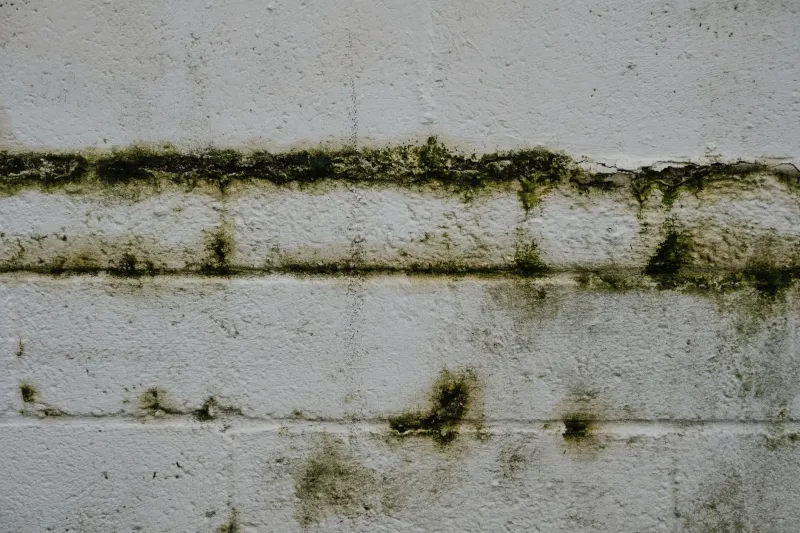
True rising damp is groundwater travelling up through porous masonry by capillary action. It is real, but it is rarer than the damp-proofing industry would have you believe. It typically affects the bottom metre or so of a solid wall, leaves a horizontal tide mark, and often brings salts that blister plaster and paint.
In a Victorian or Edwardian house with solid brick walls and no original damp-proof course, some rising damp is plausible. In a 1980s house with a proper DPC, it is far less likely. The problem is that a meter reading of 'high moisture' is not a diagnosis. It tells you the wall is wet, not why.
The cure that can cause the problem
The uncomfortable truth is that some damp treatments create the conditions they claim to fix. Injecting a chemical DPC into a wall that is already wet can trap moisture rather than stop it. Cement render and waterproof paints on solid walls do the same: they seal the surface, trap moisture behind it, and push salts out through the plaster, which then blows.
Old solid walls are designed to be breathable. Lime plaster and lime render allow moisture to move and evaporate. Cement does not. If a house has a patch of cement render at the base of a wall, a shiny waterproof coating, or a damp-proofing guarantee dated 1998, ask what was happening before and after.
What actually works
Fix the water source first. That means gutters, downpipes, drainage, ground levels, roof coverings, and any plumbing leaks. Keep external ground levels below the damp-proof course. Clear air bricks and sub-floor vents. Use breathable materials where repairs are needed. Improve ventilation, especially in kitchens, bathrooms, and cellars.
Only after those basics should anyone be talking about injection. And even then, ask for the reasoning in writing.
The paperwork worth demanding
Before exchange, ask for any damp reports and guarantees. Check whether a guarantee is insurance-backed and transferable — many are not worth the paper they are printed on once the original installer retires. Ask for invoices and Building Regulations completion certificates for any damp-proofing, tanking, or structural work. In a listed building, check that listed building consent was obtained for render, injection, or internal alterations. Unauthorised work can become your problem.
A buyer's checklist
- Where exactly is the damp, and does the pattern follow a gutter, roof, chimney, or window?
- Does it smell musty all year, or only in winter?
- Are there tide marks, salts, or blown plaster at low level?
- Has the house had a chemical DPC, cement render, or waterproof paint? When, and by whom?
- Are the gutters, downpipes, and hoppers clear and sound?
- Is external ground level below the internal floor level?
- Are air bricks and sub-floor vents open?
- Is there a transferable guarantee, and does it cover the current owner?
- Has a listed building consent or Building Regs approval been obtained for any remedial work?
- Would an independent surveyor — not a damp-proofing salesperson — look at it before exchange?
The bottom line
Damp is a diagnosis, not a death sentence. The houses most likely to have it are often the ones with the most character: solid walls, old gutters, breathable plaster, and a century of weather. Read the moisture honestly, ask for evidence, and pay for independent advice where it matters. Panic is expensive. A good surveyor is not.