Where It All Goes: Private Drainage on a Country Cottage

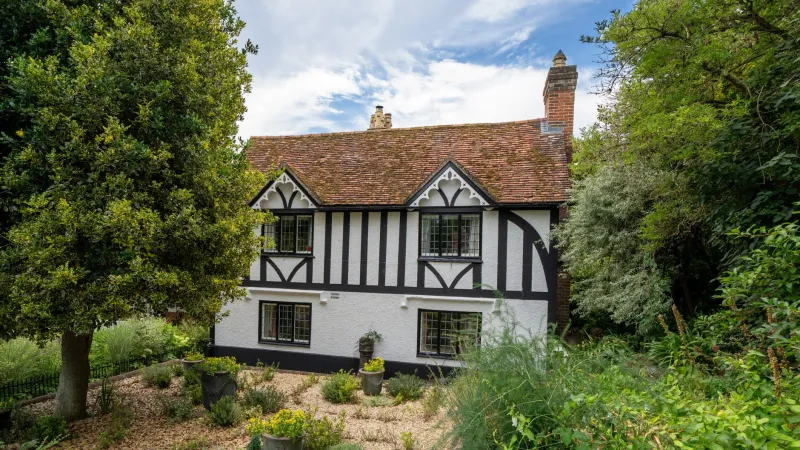
Photo: George Keating, Public domain, via Wikimedia Commons
There is a moment, usually about twenty minutes into a viewing, when the estate agent is enthusing about the inglenook and you are staring out of the window at a slightly sunken patch of lawn with a round plastic lid in the middle of it. That lid is the single most expensive piece of infrastructure you are being shown, and it will not appear in the particulars anywhere.
If the cottage is off the mains, everything that goes down the sink, the bath and the loo ends up somewhere on or under that plot. Which is fine — millions of rural homes work perfectly well this way — but it does mean the usual checks you would rely on in town will quietly tell you nothing.
The searches will not save you
The standard drainage and water search covers the public sewer network. On a private system it comes back with a polite shrug. So the reassurance you are used to as a town buyer simply is not there, and no amount of conveyancing diligence substitutes for somebody lifting the lid and looking.
Ask, in writing, three things: what type of system serves the property, where exactly it sits, and who is responsible for it. "Septic tank" is used loosely by sellers to mean anything from a properly functioning treatment plant to a brick-lined chamber that predates decimal currency.
Know your three systems
Roughly speaking you will meet one of these:
- A cesspool. Nothing drains away; it is a sealed store that must be emptied, often monthly. Cheapest to install, ruinous to run. If a seller mentions "emptied twice a year", this is not what you have.
- A septic tank and soakaway. Solids settle, liquid flows into a buried soakaway where the ground does the rest. Entirely dependent on soil. Works beautifully on gravel, hopelessly on clay.
- A package treatment plant. A small mechanical unit, usually with a little compressor humming away and a power supply you will be paying for. Cleans the discharge to a higher standard, which matters if it goes to a ditch or stream.
Each has a different running cost, a different maintenance regime, and a different set of rules attached.
The rules that travel with the house
The General Binding Rules for small sewage discharges apply to you the moment you complete, whether the system was installed in 1992 or last spring. The headlines worth knowing:
A discharge to a watercourse — a stream, ditch, brook or surface water drain — generally needs a treatment plant rather than a plain septic tank, and may need a permit. A soakaway must sit a sensible distance from habitable buildings and from any well, spring or borehole serving drinking water. Soakaways must not be sited where they will cause a nuisance or pollute groundwater. If the system is shared with a neighbour or a farm, the arrangements need to be written down, not remembered.
Ask the seller for evidence: an installation certificate, a maintenance contract, a record of emptying, any permit or registration. If none exists, that is not automatically a dealbreaker — but it does move the risk onto your side of the table, and it should move the price too.
The viewing, done properly
You cannot commission a full drainage survey before you have an offer accepted, but you can gather a great deal on a wet Tuesday.
Smell is data, not manners. A faint whiff near the lid after rain is telling you something. So is a soakaway area that is bright green in August, or permanently soft underfoot, or has a suspiciously thriving patch of reeds.
Look for the tank. Is the lid accessible, or buried under a shed, a patio, or — a genuine case — a conservatory? A tank you cannot reach is a tank you cannot empty cheaply.
Ask where the discharge goes. Follow the line if you can. If the answer is "into the brook at the bottom", you need to know what the system is and whether it is the type permitted to do that.
Check the power. A treatment plant needs electricity and will trip a circuit if the compressor fails quietly while you are away. Ask when it was last serviced and by whom.
Ask about the rain. Groundwater flooding into a soakaway is one of the most common causes of failure in heavy-clay counties, and it is exactly the sort of thing a winter viewing reveals and a July one hides.
What it costs when it goes wrong
Emptying a tank: a couple of hundred pounds, more if access is awkward or the lorry has to cross a field.
A new soakaway, when the old one has silted up or the ground has given up: several thousand, plus the excavation and the reinstatement of whatever was growing on top of it.
A replacement tank or a package treatment plant, supplied and installed: broadly five figures once you have allowed for groundworks, pipework, power and the mess. Add more for a heritage setting, a tight access track, or a listed building where the conservation officer will want a quiet word about a plastic dome in the lawn.
Connection to the mains, if a sewer happens to run along the lane: sometimes surprisingly reasonable, sometimes eye-watering, and often dependent on a neighbour's goodwill and a road closure agreement.
The buyer's version of a fair deal
Private drainage is not a red flag. A great many wonderfully characterful cottages have a well-behaved treatment plant humming away behind the log store, and their owners think about it roughly once a year.
The trap is buying a system you have not seen, have not had inspected, and cannot afford to replace. So make the offer conditional on a specialist drainage survey — a CCTV inspection where relevant, a percolation test on the soakaway, and a look inside the tank itself. Budget for one empty and one service in year one whatever the paperwork says.
And if the seller cannot tell you where the tank is, treat that as a headline finding rather than a charming quirk. Everything in a period house has a story. This one just happens to be the story about where it all goes.