Charm Has a Price Tag: When It Is Worth Paying the Character Tax in 2026
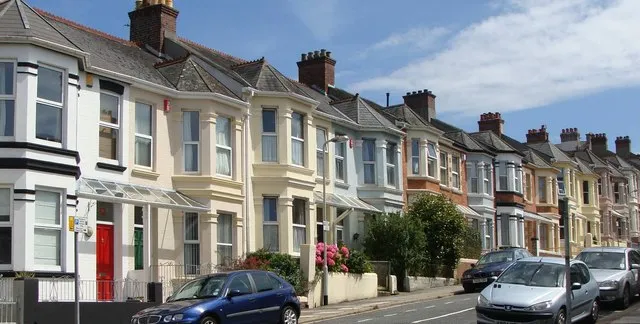
Photo: Jamescanningauthor, CC BY-SA 4.0, via Wikimedia Commons
Here is a confession from the viewing trail: charm is not rational. A beamed ceiling can make otherwise sensible people ignore a boiler from the 1990s. A wonky floor can feel like personality rather than a warning. And the asking price often reflects that feeling. In 2026, the character tax is alive and well — but it is not evenly applied, and it is not always worth paying.
What the premium actually buys
Across the UK, agents still talk about a character premium for cottages, period terraces and converted barns. It is not a single number. In a desirable village, a listed stone cottage with a good garden might command 10 to 20 per cent more than a plain modern equivalent. In a less proven location, the same charm can sit on the market for months. The premium is really a bundle: scarcity, looks, story and the promise of a lifestyle. Only some of that bundle survives a cold February.
The fundamentals do not care about beams
Beams do not shorten a commute. Original fireplaces do not improve flood resilience. A pretty façade does not stop a solid wall from being expensive to heat. The character tax is only worth paying when the fundamentals stack up: transport, schools if they matter to you, flood risk, insurance, heating costs and resale appeal.
Transport and the reality of the last mile
A chocolate-box cottage down a single-track lane is lovely until you are doing the school run in the dark and reversing into a hedge. In 2026, buyers are still paying for rural charm, but they are asking harder questions about broadband, bus routes and the true cost of a second car. If the location only works in sunshine and good humour, the premium is doing a lot of heavy lifting.
Flood risk is not a cosmetic issue
A stream at the bottom of the garden can add thousands to the view and subtract thousands from the resale value. Check the Environment Agency flood maps, ask about insurance claims and look at the practical stuff: floor levels, drainage, boundary walls and whether the cellar has ever been wet. No amount of exposed brick makes up for a house that floods every few winters.
Heating an old house is a relationship
Solid walls, sash windows and lofty ceilings are wonderful. They are also a standing invitation to heat loss. Before you pay a character premium, ask what it costs to run the place in January. A good EPC is not everything, but a terrible one without a plan is a red flag. Budget for insulation, draught-proofing and sensible heating controls — and accept that some old houses will never be cosy in the way a new-build is.
Resale appeal: who will buy it next?
The character tax works both ways. A quirky cottage in a well-known village may always find a buyer. A quirky cottage on a busy road with a low ceiling in the bathroom and a listed-building consent puzzle may not. Look at sold prices on the street, not just asking prices. Ask whether the premium you are paying is normal for the area or a one-off flight of fancy by the current owner.
When to walk away
Walk away when the only thing the house has going for it is the look. Walk away if the survey reveals structural movement with no clear cause, if flood risk is real rather than theoretical, if insurance is refused or loaded with a huge excess, or if unauthorised works in a listed building could land you with regularisation costs. Walk away if the asking price is above the street ceiling and the location cannot justify it.
The Barnaby & Jones line
Character is worth paying for. It is one of the few things a new-build cannot fake. But the tax should buy you something more than exposed timber and a nice fireplace. It should buy a home that works: a sensible commute, manageable running costs, a location with resale depth and a list of quirks you can afford to maintain. In 2026, charm is still a good investment — but only when the boring bits add up.